Start with the intended output
A mechanical recycling line should be designed backwards from a product specification. Fibre for spinning has different requirements from fibre used in needle-punched insulation, padding or other nonwovens. A process that successfully converts fabric into a fluffy mass has not necessarily made a suitable spinning feedstock. Agree the downstream application, required tests and acceptance criteria before selecting machinery or making a recovery claim.
Incoming construction matters. Loosely knitted fabric, tightly woven workwear and bonded multilayer products do not open in the same way. Fibre type, yarn twist, wear, finishes and previous processing affect the effort needed to separate the structure. Relatively consistent production offcuts may be easier to qualify than mixed post-consumer garments, but consistency must still be demonstrated rather than assumed.
Remove what the line cannot tolerate
Preparation commonly includes sorting, cutting and removal of buttons, zips, rigid trims and other hardware. Magnets can help capture ferrous metal, but they do not detect every metal or non-metal hazard. Detection, inspection and maintenance need to match the equipment and feedstock. A missed object can damage opening elements, produce sparks or contaminate the recovered fibre.
Cutting makes pieces manageable for the opening line; it is not the same operation as recovering individual fibres. Excessive cutting may shorten fibres before opening begins. Inadequate preparation can leave large pieces circulating through the process. Trial work should establish a preparation window that balances feeding consistency, energy demand, useful fibre recovery and equipment wear.
Open progressively, then measure damage
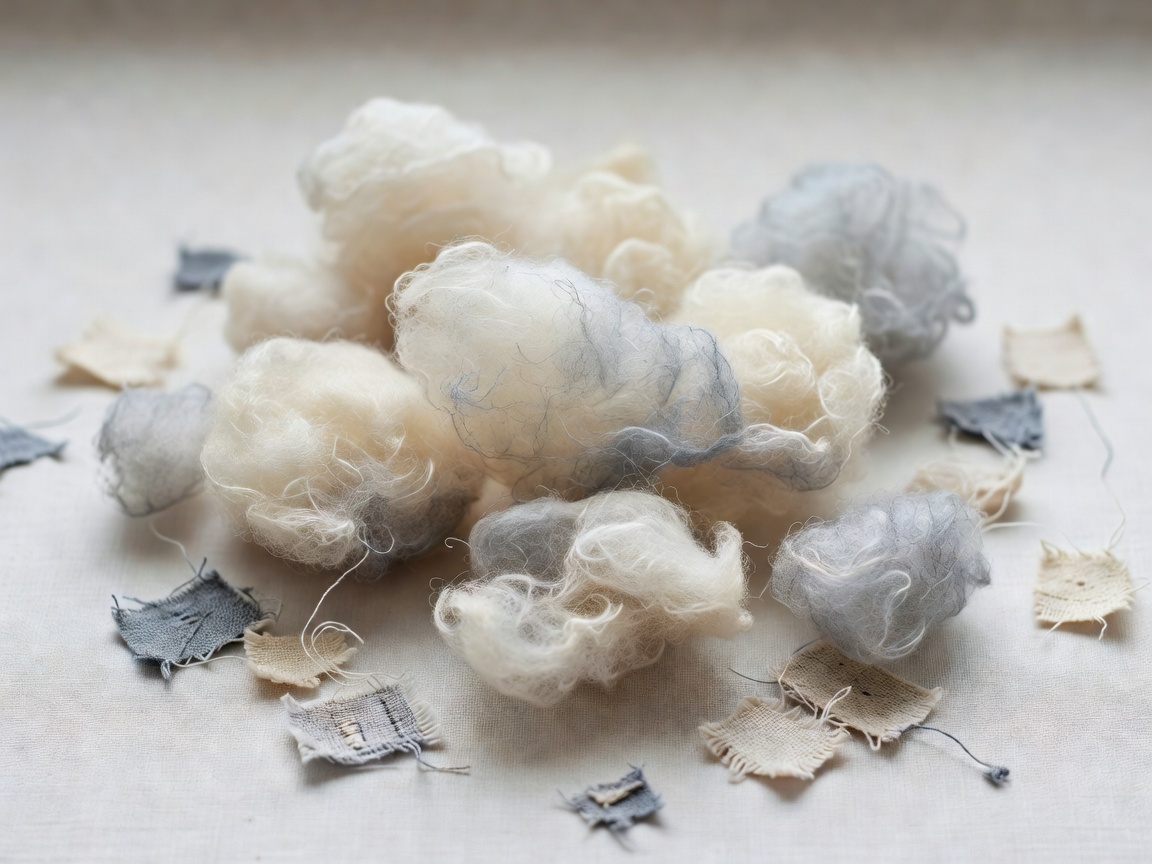
Opening equipment uses mechanical action to pull yarns and fabrics apart. Several stages may be used, with intermediate separation of dust and incompletely opened pieces. More aggressive treatment can improve disintegration while increasing short fibres and fines. The optimum setting is therefore not simply the one that eliminates every visible fragment.
Track fibre length distribution, unopened content and contamination at defined sampling points. Where appropriate, evaluate strength-related properties and performance in an actual spinning or nonwoven trial. A mean value alone can hide a large short-fibre fraction. Lot-to-lot variation also matters: a buyer may tolerate a modest average performance but reject unpredictable processing behaviour.
Blending with other fibres can make a recovered fraction usable in a particular yarn or product. That does not justify a universal blending percentage. The necessary recipe depends on fibre type, machinery, yarn specification and end-use requirements. State the actual recycled fraction and substantiate it through a suitable chain-of-custody system rather than treating a successful pilot recipe as a general rule.
Keep dust and rejects in the ledger
Mechanical processing generates dust, loose fibres and rejected fragments. Extraction is part of the production system, not an optional housekeeping accessory. The UK Health and Safety Executive provides guidance on local exhaust ventilation and occupational exposure control. Applicable combustible-dust risks also require competent assessment; in the European context, ATEX requirements may be relevant to equipment and workplace arrangements.
Do not treat every extracted solid as recycled product. Characterise the fractions and document their destinations. Some may have a suitable secondary application; others may require waste treatment. A recovery balance should distinguish accepted input, saleable output, internal recirculation, stock changes and material leaving as waste. Counting recirculated fragments repeatedly can create a misleading impression of productivity.
| Property | Why it matters | Useful evidence |
|---|---|---|
| Fibre length distribution | Influences spinning and web formation | Agreed method and lot results |
| Residual fabric fragments | Can disrupt further processing | Sampling and separation test |
| Colour consistency | Affects shade control and finishing | Representative sample approval |
| Foreign material | Affects safety and product suitability | Contamination limits and inspection records |
Separate traceability from performance
Textile Exchange’s Recycled Claim Standard and Global Recycled Standard provide frameworks for defined recycled-material and chain-of-custody claims. The Global Recycled Standard also includes additional processing requirements within its scope. Neither standard, on its own, establishes that a fibre will spin well or that one product has a lower life-cycle impact than every alternative. Check the current standard, certification scope and transaction documentation relevant to a purchase.
ISO 14021 is relevant to self-declared environmental claims, including how recycled-content language is framed. Product performance still needs application-specific evidence. An insulation buyer may require fire, moisture and durability assessment, while a yarn buyer needs processing and textile performance data. A certificate is part of a purchasing file, not a substitute for the file.
Technical note: compare routes on an equivalent basis
Avoid comparing a mechanical fibre at the plant gate with a finished yarn from another route. Include the extra manufacturing steps needed to deliver equivalent functionality. State whether sorting, transport, blending and reject treatment are included.
Rieter and ANDRITZ are useful equipment-industry reference points for understanding spinning preparation and textile recycling machinery. Supplier trials can help define a processing window, but commercial claims should be checked against representative feedstock and independent measurements. The useful question is not whether a machine can open fabric. It is whether the complete line consistently produces an output that a named application can use.
Reference points
- Textile Exchange — Recycled Claim Standard and Global Recycled Standard resources.
- Health and Safety Executive: local exhaust ventilation — exposure-control guidance.
- European Commission: ATEX — equipment regulatory context.
- Rieter and ANDRITZ — equipment and application information.
- ISO — ISO 14021 environmental-claims standard.