Define what the load actually contains
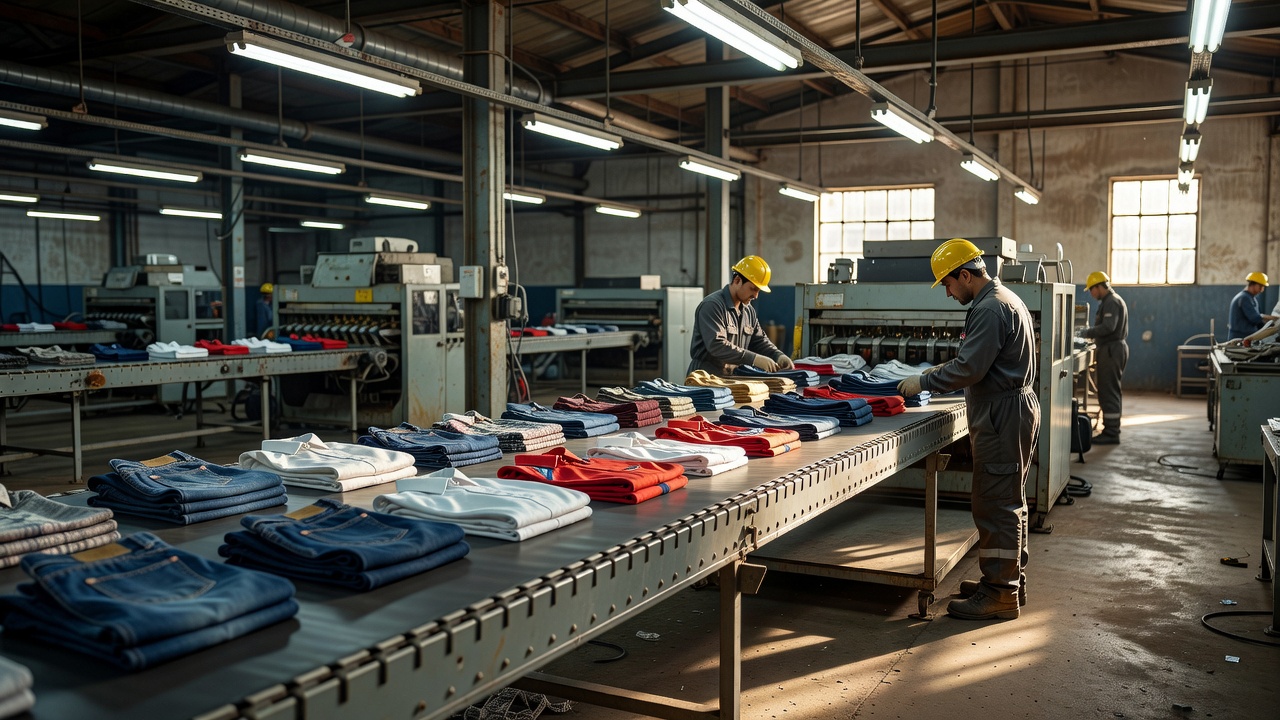
Incoming textiles differ in ways that are easy to miss on a weighbridge. A delivery may combine factory offcuts, returned garments, household collections and components from upholstered products. Each origin has a different contamination profile. Factory scrap may have consistent composition but retain lubricants or finishes. Collected clothing may contain moisture, personal objects and misleading labels. Record the origin, supplier, delivery mass and collection conditions before assigning the material to a recovery route.
Keep the received mass distinct from dry, accepted feedstock. Moisture adds weight without adding recoverable fibre and can change storage risks. A receiving record should identify the sampling method, observations, quarantined material and reason for rejection. Photographs and batch identifiers make later disputes easier to investigate. A commercial description such as “cotton-rich” is not a complete technical specification.
Protect reuse before destructive treatment
Sorting is also a decision about whether recycling is appropriate. The European Union’s Waste Framework Directive establishes a waste hierarchy in which preparation for reuse generally precedes recycling. Whether an individual item can be reused depends on condition, hygiene, demand and applicable law. Separate potentially reusable goods before cutting or shredding makes that option impossible. Do not report every collected garment as recycled simply because it entered a sorting facility.
WRAP’s textiles guidance provides useful context for collection and sorting practice. It does not replace the receiving plant’s own acceptance criteria. A buyer of reusable garments and a buyer of fibre feedstock require different evidence. Keep their quantities and destinations separate in the ledger, including exports and material awaiting a confirmed outlet.
Combine identification methods
Manual inspection identifies construction, visible contamination, hardware and some obvious material categories. Labels provide clues but may be missing, inaccurate or incomplete. Regulation (EU) No 1007/2011 governs textile fibre names and composition labelling in its scope; it does not make an old garment label a laboratory analysis of an incoming waste lot.
Near-infrared sorting can classify many exposed fibre surfaces rapidly, but it is not an all-purpose composition detector. Dark colourants, multilayer construction, surface finishes, moisture and hidden components can affect results. A sensor may observe the outer fabric while overlooking a lining or an elastic waistband. Use a validation programme with representative material and state what the system has actually been trained and tested to distinguish.
For disputed or high-value fractions, laboratory analysis may be warranted. The ISO 1833 series describes quantitative chemical analysis methods for various textile fibre mixtures. Method selection matters: not every blend can be resolved with the same procedure. Sampling uncertainty also remains. A precise test on an unrepresentative handful does not establish the composition of an entire bale.
Write route-specific acceptance rules
A mechanical opening line may tolerate a blend that a chemical process cannot accept. Conversely, a chemical route designed for a particular polymer may accept short fibres that have little value for spinning. Discuss specifications with the actual receiving process rather than imposing one generic definition of “recyclable”. Set limits for unwanted fibres, metal, coatings, moisture and other critical contaminants, with an agreed method for checking each limit.
Elastane deserves particular attention because a small functional component can complicate separation and downstream processing. Coated fabrics, flame-retardant treatments and waterproof membranes also require a deliberate decision. Where chemicals of concern may be present, REACH obligations and relevant waste rules need specialist assessment. Visual cleanliness is not evidence of chemical suitability.
| Observation | Decision to document | Evidence to retain |
|---|---|---|
| Unknown mixed composition | Test, segregate or decline | Sampling and analysis record |
| Wet or odorous delivery | Quarantine and assess handling risk | Condition report and mass basis |
| Metal fasteners or electronics | Remove before sensitive equipment | Preparation check and rejected mass |
| Reusable garments | Assess a separate reuse pathway | Condition criteria and destination |
Keep the outgoing fractions legible
A sorting plant produces decisions as well as material. Record each fraction’s identity, mass, destination and acceptance status. “Sent for recycling” means something different from “processed into an approved output”. Track returned loads and unexplained stock changes. If a fraction is downcycled into wiping cloths or insulation, name that application rather than implying a closed clothing loop.
SIPTex in Malmö, developed through a project coordinated by IVL Swedish Environmental Research Institute, is a useful real-world reference for automated textile sorting. Its existence illustrates the importance of sorting infrastructure, not a guarantee that every collected blend has a suitable recycling market. Plant planners should distinguish demonstrated identification capability from buyer demand and long-term commercial operation.
Technical note: establish a defensible sampling plan
Define the lot, sampling locations, number of increments, preparation method and acceptance rule before a dispute arises. Include variation within bales and between deliveries. Retain reference samples where appropriate, and agree how a failed lot will be retested or rejected.
Reference points
- European Commission: Waste Framework Directive — hierarchy and waste-management context.
- WRAP — practical textile circularity and collection resources.
- Regulation (EU) No 1007/2011 — textile fibre naming and labelling.
- ISO — ISO 1833 series; consult the applicable current method.
- IVL Swedish Environmental Research Institute — SIPTex project information.